RFP Management Platform: One Workspace Per Tender
TenderOS is an RFP management platform, not a writing assistant with an RFP label on it. It is a workspace built around the actual shape of bid work: read the document, structure the obligations, find the proof, write the answers, check the pack and export it.
Tender Analyzer
Upload the tender pack and TenderOS reads it end to end: scope, issuer, submission method, deadlines, eligibility conditions and every clause that asks you to do something.
- Full requirement extraction
- Deadline and date detection
- Page-level source traceability
Compliance Matrix
Every extracted requirement becomes a row you can filter, assign and track — clause reference, page number, original wording, normalised wording, owner and status.
- Spreadsheet-grade filtering
- Mandatory and pass/fail flags
- DOCX, XLSX and PDF export
Company Brain
Your approved company knowledge in one place: profiles, certifications, insurances, case studies, CVs, policies and previously approved answers.
- Approved claims library
- Certificate expiry tracking
- Reused across every future bid
Evidence Matcher
For each requirement, TenderOS searches your Company Brain and tells you whether the proof exists, which document holds it, and where nothing was found.
- Strong / possible / weak matches
- Missing-evidence flags
- Expired-document warnings
Response Studio
Draft answers grounded in the requirement text and your approved evidence — never in invented company facts. Missing information is marked, not fabricated.
- Grounded, cited drafts
- Word and page limit enforcement
- Review and approval workflow
Bid Fit
Before your team writes forty pages, see the blockers: missing certifications, insufficient references, a deadline four days out, an eligibility rule you cannot meet.
- Strong / conditional / weak fit
- Reasoned blockers, not a score
- No invented win probability
Risks & Clarification Questions
Contract clauses worth a second look, ambiguous scope, contradictory dates and undefined volumes — each linked back to the clause that raised it.
- Draft risk register
- Commercial review flags
- Source-linked questions
Submission Readiness
A completeness check, not a prediction: how many mandatory items are done, which responses await approval, which document expired, what still blocks submission.
- Transparent completeness math
- Blocker resolution list
- Final review before export
What the sidebar looks like on a live bid
Eleven views over the same underlying data, so nobody has to reconcile a spreadsheet against a folder against an email thread.
Every extracted fact keeps its source
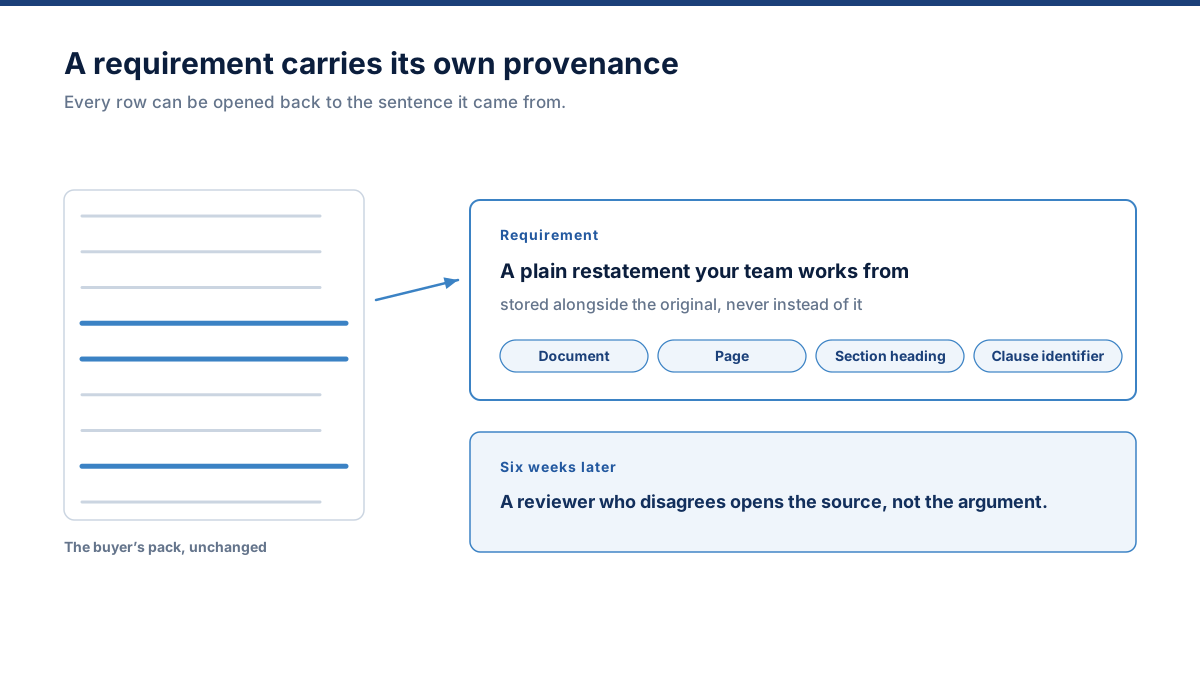
A requirement in TenderOS is never a free-floating sentence. It carries the document it came from, the page it appeared on, the section heading above it, the clause identifier where the document provides one, and the buyer's original text. Evaluation panels score against the solicitation's own structure — FAR Subpart 15.3 sets that out for US federal work — so the identifier is what makes an answer checkable.
That is what makes the workspace defensible six weeks later. A reviewer who disagrees with a normalised requirement can open the source in one click rather than re-reading the pack. An evaluator's clause reference maps straight onto your row. And nothing the AI layer produces can be checked against nothing.
The same principle governs generated responses: each one can be opened to show the tender clause that prompted it and the company document that supports each factual claim in it.
What a requirement record holds
- Source document, page, section and clause identifier
- Original clause text, stored verbatim and never overwritten
- Normalised requirement your team works from
- Categories, requirement type and mandatory flag
- Evidence required, response required, evaluation weight where stated
- Owner, due date, status and review notes
- Linked evidence documents and draft response
- Extraction confidence, with low-confidence sources flagged for review
See it on your own tender
The free analyzer runs the first stage of this pipeline in your browser. It is the fastest way to judge whether the rest is worth your time.