Evidence Matching: Prove Each RFP Requirement
An evaluator opens your response to section 4.2.1 of a complex RFP, looking for explicit proof that your infrastructure meets strict high-availability requirements. Your written narrative states that your system is resilient, fault-tolerant, and tested under high transaction loads. However, because no third-party audit report, architectural diagram, or SLA report is attached to support the claim, the scoring panel marks the item as unsubstantiated and awards lower points. High-stakes public and private sector procurements do not evaluate self-declarations alone; evaluators demand concrete, verifiable artifacts that prove every claim made across a proposal.
RFP evidence matching is the systematic process of mapping explicit contract requirements, technical standards, and compliance mandates in a request for proposal directly to verified supporting artifacts—such as certificates, audited financial statements, case studies, and policy documents—ensuring every assertion in a bid response is backed by documented proof before submission.
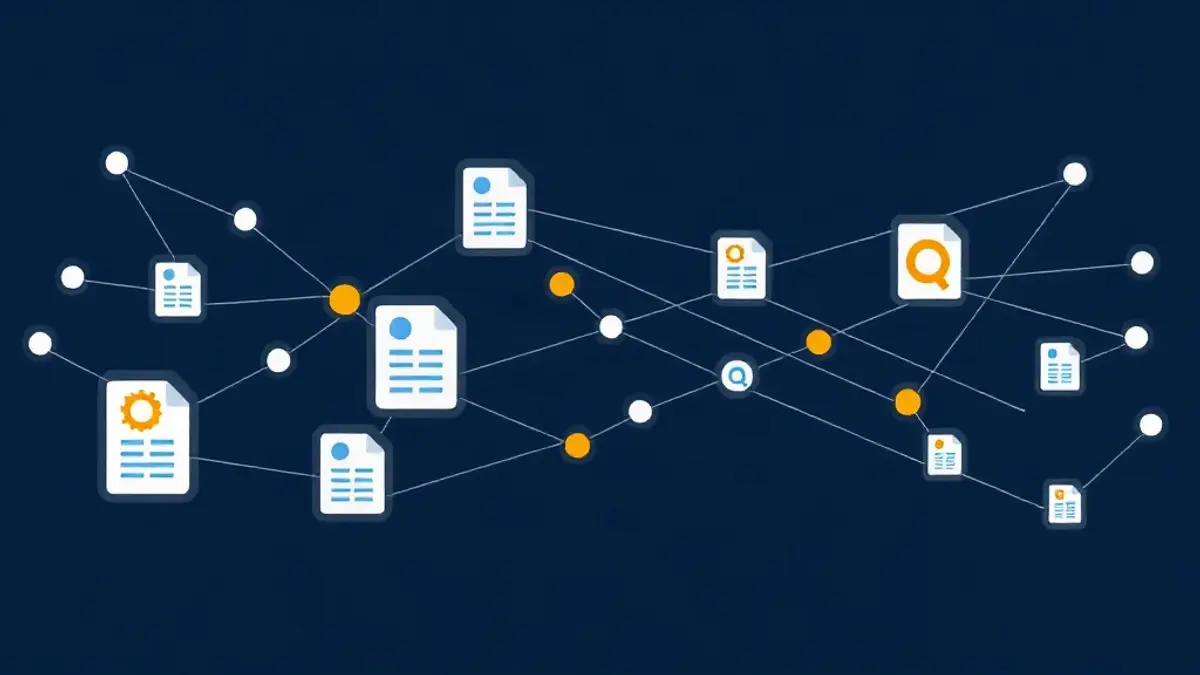
The Anatomy of Evidence Matching in Proposal Management
Proposal evaluation relies on strict scoring matrices. When a evaluation panel reviews a bid, each requirement statement is assessed against two distinct parameters: narrative compliance and factual verification. Narrative compliance addresses whether your team answered the question asked, while factual verification determines whether your organization possesses the actual operational capacity, legal standing, and past experience to deliver the contract. Evidence matching bridges the gap between text written in a response document and the physical proof held inside your enterprise repository.
Without a structured methodology to match RFP requirements to documents, response teams risk submitting proposals that sound convincing but fail formal audit checks. Procurement officers frequently disqualify bids for missing mandatory schedules, expired insurance certificates, or unverified past performance claims. Effective proposal evidence management ensures that every compliance item, mandatory requirement, and evaluation criterion is explicitly paired with a primary source document prior to final submission.
Modern procurement teams do not treat evidence as an afterthought added during the final hours of bid assembly. Instead, systematic matching begins during the initial bid breakdown. By isolating every requested document, proof clause, and submission item during the tender gap analysis, proposal teams can identify missing assets weeks before the hard deadline, avoiding high-stress operational scrambles.
Why Narrative Assertions Fail Procurement Evaluation
Evaluators in formal tender procedures are bound by legal and regulatory frameworks that require objective scoring. If two competing vendors claim to maintain robust data encryption practices, but Vendor A provides an audited SOC 2 Type II report while Vendor B merely describes its internal encryption policies, the evaluation panel must award higher technical points to Vendor A. Narrative claims without references are categorized as unverified declarations.
Furthermore, procurement guidelines often mandate strict disqualification for failing to supply mandatory compliance documents. A proposal can contain hundreds of pages of polished technical prose, yet still be rejected at the preliminary evaluation stage if a single required safety policy, audited tax clearance certificate, or financial report is omitted. The primary cause of bid failure is rarely bad writing; it is incomplete compliance proof.
To eliminate this vulnerability, response teams must institute a rule of evidence before eloquence. Every sentence asserting a company capability, financial metric, security control, or operational process should point directly to an underlying corporate document. When narrative assertions are strictly tied to verified sources, the evaluation team can easily validate compliance during their review.
The Mechanics of Proposal Evidence Management
Proposal evidence management involves organizing, tagging, and indexing corporate documentation so that bid managers can instantly retrieve verified proof for any tender query. Corporate records naturally live in disconnected silos across legal, human resources, finance, technical support, and executive management offices. Without a centralized repository, bid teams lose hours searching through email threads and shared drives to locate the latest version of an executive signature or policy document.
A structured framework categorizes evidence into distinct asset classes:
- Legal and Regulatory Assets: Articles of incorporation, business licenses, tax registration status, data processing agreements, and statutory filings.
- Operational and Quality Standards: International Organization for Standardization certifications, information security attestations, business continuity plans, and quality manuals.
- Financial and Corporate Assets: Audited financial statements, bank reference letters, credit ratings, parent company guarantees, and balance sheets.
- Past Performance Assets: Client references, executed project completion certificates, signed performance letters, and structured case studies. Deciding which of those references best fits a particular tender is a separate discipline, covered in our guide to matching case studies to RFP experience criteria.
- Human Capital Assets: Verified staff curricula vitae, professional certifications, training records, and organizational charts.
When these assets are systematically structured inside a managed repository, proposal leads can execute an RFP compliance gap analysis within minutes of receiving the solicitation documents. Instead of asking subject matter experts to re-verify routine claims for every incoming RFP, the team relies on pre-approved, time-stamped documentation.
Identifying Gaps Early: The RFP Gap Analysis
A tender gap analysis is the process of comparing what a buyer requires against what your enterprise currently possesses. Performing this analysis immediately after document release prevents teams from spending hundreds of hours drafting responses for tenders they cannot legally or technically win.
Missing proof falls into two distinct categories: structural document gaps and material qualification gaps. A structural gap occurs when your company possesses the required evidence—such as an active health and safety policy—but the file has not been retrieved, formatted, or updated for the response package. A material qualification gap occurs when the buyer mandates a credential your company does not hold, such as three years of audited accounts for a newly formed entity or a specific regional operating permit.
To catch these issues early, response teams must systematically evaluate every clause in the solicitation. Running an automated audit on incoming tender files allows bid teams to instantly identify missing evidence before allocating technical writing resources.
The following checklist highlights the standard proof items bid teams must verify during an initial tender analysis:
- Active corporate registrations, tax standing, and business operating licenses.
- Commercial insurance documentation meeting required policy thresholds.
- Current security and compliance certifications relevant to the buyer’s industry.
- Audited financial balance sheets covering the requested historical periods.
- Client reference contact details, including written permissions for buyer outreach.
- Staff CVs matching named roles in the resource allocation schedule.
- Signed non-disclosure agreements, subcontractor disclosures, and joint venture documentation.
Building a Centralized RFP Evidence Library
To streamline evidence retrieval, organizations should establish a dedicated RFP evidence library that stores pre-approved corporate assets alongside detailed usage guidelines. Unlike a general file system, an evidence library structures documents around procurement-specific classification standards.
Maintaining a clean separation between raw corporate files and response-ready evidence is essential. For instance, a raw corporate policy document may run fifty pages, whereas an evidence library entry includes both the complete document and a curated summary paragraph that answers specific security questionnaire prompts directly. For deeper strategies on structuring corporate knowledge for bids, consult our detailed framework on centralized RFP knowledge management strategy.
An effective evidence repository tracks several metadata properties for every uploaded asset:
- Document Owner: The internal subject matter expert responsible for annual reviews.
- Effective and Expiration Dates: Automated tags that flag upcoming renewals.
- Security Classification: Markings indicating whether the document can be shared publicly, under non-disclosure agreement, or with redactions.
- Requirement Tagging: System tags linking the document to standard procurement clauses (such as disaster recovery, environmental governance, or technical architecture).
Automated Gap Analysis: Match RFP Requirements to Documents
Manual requirement tracing across three-hundred-page RFP packages is prone to human error. Bid managers using manual highlights frequently overlook nested instructions hidden within tender appendices, such as mandatory formatting rules or subtle proof requests embedded in pricing notes.
Modern proposal software uses AI document matching for proposals to ingest complete solicitation packages, parse the text into discrete requirement statements, and automatically cross-reference those requirements against company evidence files. When an RFP demands proof of ISO compliance, the system scans the corporate repository, verifies the presence of an active certificate, checks its expiration date, and flags the requirement as matched.
To initiate this process quickly without risking internal data privacy, proposal managers can utilize the free tender analyzer. This browser-based tool allows users to drop DOCX, TXT, or text-based PDF files into their browser to parse requirement counts, identify mandatory statements, extract requested document lists, and flag commercial risk clauses. Because the processing runs locally within the browser, sensitive tender files are never uploaded to an external server.
Classifying Tender Proof: Mandatory vs Desirable Criteria
Not all RFP requirements carry equal weight in procurement evaluations. Solicitation packages separate requirements into mandatory conditions for evaluation (often phrased as “shall,” “must,” or “minimum qualification”) and secondary evaluation criteria (phrased as “should,” “may,” or “preferred”).
Failing to provide evidence for a mandatory requirement results in immediate disqualification, regardless of how strong the rest of the bid is. Conversely, failing to back up a desirable criterion reduces the overall technical score but may not eliminate the bidder entirely. Bid teams must categorize their company evidence RFP assets based on these structural categories.
The table below illustrates a standard requirement evaluation matrix showing how different evidence types impact bid compliance and scoring.
| Requirement Classification | Solicit Phrases Used | Required Supporting Evidence | Non-Compliance Impact |
|---|---|---|---|
| Mandatory Legal Eligibility | ”Must be licensed”, “Shall provide proof of registration” | Business licenses, tax clearances, corporate registration certificates | Immediate administrative disqualification |
| Mandatory Financial Capacity | ”Must demonstrate minimum revenue”, “Audited balance sheet required” | Three years of audited financial statements, CPA letters | Disqualification at preliminary evaluation stage |
| Mandatory Security & Quality | ”Shall maintain accredited certification”, “Must comply with standards” | Third-party audit certificates (e.g., ISO, SOC 2) | Technical rejection prior to detail review |
| Scored Technical Capability | ”Should demonstrate experience”, “Preferred capability” | Verified case studies, client reference letters, system logs | Reduced technical point allocation |
| Scored Staffing Competency | ”Proposed staff should hold certifications”, “Relevant experience” | Staff CVs, vendor certifications, degree credentials | Lower team competency evaluation score |
Note: The table above illustrates standard procurement categorization standards and evaluation impact profiles.
Managing Expiry Dates and Recertification Cycles
A common issue in proposal evidence management is submitting expired certificates. Evaluation committees check document validity dates. Submitting an insurance policy that expired last week or an ISO certificate that lapsed mid-tender is treated as submitting no document at all.
For compliance standards such as ISO/IEC 27001, frequently requested as tender evidence, organizations must track surveillance audits, full recertification schedules, and scope statements. If an audited certificate is due to expire during the evaluation window or contract startup period, the proposal submission should include both the active certificate and an official letter from the registrar confirming that recertification is underway.
Maintaining active schedules for corporate policies, professional liability insurance, and employee safety accreditations requires continuous governance. To prevent expired documents from entering bid submissions, proposal leads should establish automated monitoring systems. Read our comprehensive guide on tracking certificate and insurance expiration dates to learn how to automate renewal workflows.
Grounded AI Drafting: Evidence Before Eloquence
When leveraging artificial intelligence to accelerate proposal responses, bid managers must guard against AI hallucinations. Standard consumer language models are designed to generate fluent, persuasive prose; however, when faced with a gap in knowledge, ungrounded models may invent client references, fabricate security features, or declare compliance with standards your company does not practice.
In formal procurement, an invented capability is a misrepresentation that can lead to contract cancellation, financial penalties, or legal debarment. Professional bid software must operate on a strict principle: evidence before eloquence.
Platforms like TenderOS solve this issue using grounded AI drafting engines. Instead of generating unverified claims, the platform restricts its response engine to information held inside your Company Brain—your verified repository of certificates, case studies, CVs, and corporate policies.
If a prompt asks for details about a capability that lacks supporting evidence in your library, the system does not invent an answer. Instead, it inserts an explicit marker—such as [MISSING EVIDENCE: ISO 27701 Privacy Certificate]—and alerts the proposal manager to source the missing document before finalizing the section.
Assembling the Final Attachment Packet
Once evidence matching and draft generation are complete, the proposal team must compile, format, and cross-reference the final attachment packet. Procurement portals often restrict file sizes, limit upload fields, or impose strict file naming conventions. Failing to follow attachment instructions can cause files to be rejected by automated portal upload scripts.
Every attached artifact must be given a clear file name that mirrors the nomenclature used in your proposal compliance matrix. For example, if the RFP asks for “Appendix C: Environmental Policy,” the submitted file should be saved as Appendix_C_Environmental_Policy_[CompanyName].pdf rather than an obscure internal code like POL_ENV_v3_final.pdf.
Additionally, the main proposal document should contain direct cross-references pointing evaluators to specific attachments. When responding to a technical clause, state your compliance in the narrative text, cite the specific evidence document name, and reference the corresponding appendix number. To ensure your submission packet meets all buyer prerequisites, review our essential tender document submission checklist.
Standardizing Tender Gap Analysis Across Cross-Functional Teams
Evidence matching is inherently cross-functional. A single complex proposal requires input and verification from legal counsel, information security leads, finance managers, technical architects, and executive leadership. Without standardized gap analysis tools, collaboration degrades into long email threads, conflicting file versions, and unverified response text.
To maintain accountability, bid managers should establish a clear RACI matrix (Responsible, Accountable, Consulted, Informed) for evidence collection during the tender setup phase:
- Bid Manager (Accountable): Runs the initial requirement parsing, builds the compliance matrix, assigns evidence gaps to SMEs, and audits final attachments.
- Subject Matter Experts (Responsible): Retrieve, update, and upload requested certificates, technical diagrams, case studies, and policy documents to the central repository.
- Legal & Finance Officers (Consulted): Review commercial risk clauses, approve financial statements, verify liability insurance limits, and sign formal declarations.
- Executive Sponsor (Informed): Receives automated status updates regarding critical compliance gaps that might block bid submission.
When cross-functional teams work inside a shared workspace, evidence status is visible in real time. If the security team has not uploaded an updated penetration test report five days before submission, the system flags the missing dependency, allowing leadership to intervene before the deadline.
Commercial Risk and Governance Verification
Evidence matching extends beyond technical criteria; it plays a vital role in commercial risk governance. RFP documents contain complex legal terms, indemnification clauses, service level agreements (SLAs), and warranty expectations. Submitting a bid without cross-referencing your legal team’s pre-approved commercial terms creates significant business liability.
During the initial requirement analysis, the bid team must flag high-attention commercial clauses, including limitation of liability, intellectual property ownership, termination for convenience, and liquidated damages. Matching these clauses against your internal governance policies ensures that any necessary exceptions or clarification questions are drafted early.
The table below outlines common commercial risk areas, the evidence required to validate compliance, and the internal governance checks necessary before approval.
| Commercial Clause Category | RFP Condition Example | Evidence / Document Required | Governance Check Procedure |
|---|---|---|---|
| Limitation of Liability | Unlimited liability demanded by buyer | Corporate Risk Policy, Insurance Capacity Letter | Legal review required if cap exceeds standard policy terms |
| Service Level Penalties | Financial credits for downtime | SLA Performance Reports, System Monitoring Logs | Engineering approval of historical uptime metrics |
| Data Protection & Location | In-country data residency mandatory | Data Center Attestations, SOC 3 Reports, Data Architecture | Security officer verification of server locations |
| Parent Company Guarantee | Subsidiary bidding requires parent backing | Executed PCG Document, Board Resolution | Executive board authorization prior to signature |
| Performance Security | Mandatory performance bond or escrow | Bank Comfort Letter, Surety Facility Certificate | Finance team validation of bonding lines |
Note: The figures and categories shown reflect illustrative commercial governance structures.
Step-by-Step Process for Complete RFP Evidence Verification
Executing a reliable evidence matching process requires a disciplined workflow from the moment an RFP is published to the final submission. Following a structured procedure eliminates guesswork and ensures that every response is fully supported by documentation.
- Ingest RFP Package: Import all tender documents, schedules, instructions, and appendices into a unified parsing engine.
- Extract Requirements: Parse narrative text into discrete, actionable requirement statements, separating mandatory items from optional criteria.
- Run Gap Analysis: Match extracted requirements against your corporate evidence repository to automatically link existing assets and identify missing documentation.
- Assign Evidence Gaps: Direct specific evidence collection tasks to internal SMEs for any missing policies, certificates, staff CVs, or financial reports.
- Draft Grounded Responses: Generate response text using only verified corporate evidence, inserting precise citations and keeping explicit markers for missing items.
- Verify Asset Validity: Confirm that all linked certificates, insurance schedules, and policy documents are active and will remain valid throughout the evaluation phase.
- Compile Compliance Matrix: Export a comprehensive compliance matrix showing every requirement, its match status, the drafted response, and the attached cross-reference.
- Conduct Pre-Submission Audit: Perform a final review to verify that every file requested in the RFP attachment list is correctly formatted, named, and packaged.
Following this step-by-step framework ensures that your submission is complete, structurally sound, and fully verifiable by the buyer’s evaluation panel.
Security and Browser-Local Processing Principles
Proposal documents contain proprietary IP, detailed pricing models, sensitive infrastructure descriptions, and confidential client lists. Ingesting these files into public cloud tools or unvetted AI utilities creates security vulnerabilities and may breach non-disclosure agreements.
Data security must be prioritized from the start of the bid process. Organizations should mandate that tender analysis tools handle confidential documents strictly in compliance with enterprise security protocols.
This security-first philosophy drives the architecture of the TenderOS free tender analyzer. Designed to give bid managers instant visibility into incoming RFP requirements, the tool executes file parsing and requirement extraction entirely within the user’s browser local memory. The source file is never transmitted to an external server, preserving data privacy while delivering precise requirement counts, document lists, and commercial risk flags.
For enterprises requiring team collaboration, cloud synchronization, and grounded drafting capabilities, paid platform environments expand on this foundation. Shared workspaces store corporate knowledge in isolated, encrypted tenant databases, ensuring that company IP is protected while giving proposal teams access to advanced proposal evidence management.
Frequently asked questions
What is the difference between an RFP knowledge base and an RFP evidence library?
An RFP knowledge base contains text answers to past tender questions, such as corporate background stories and standard technical descriptions. An RFP evidence library holds verified primary source documents, such as ISO certificates, audited financial statements, insurance policies, staff CVs, and signed client reference letters used to prove those narrative claims.
How does AI document matching for proposals handle missing evidence?
When an AI document matching engine scans a tender for mandatory criteria and cannot locate a corresponding asset in the corporate repository, it flags an explicit evidence gap. Grounded platforms like TenderOS insert a marker into the response draft rather than inventing a detail, alerting the proposal lead to upload the required file.
Can TenderOS guarantee that our bid will be fully compliant or win the contract?
No platform can guarantee contract awards or compliance. TenderOS provides tools for requirement extraction, evidence matching, risk identification, and grounded drafting, but final proposal accuracy, strategic positioning, legal review, and submission remain the responsibility of the bidding organization.
What happens if an RFP requests a certificate our company does not possess?
If an RFP requires a mandatory credential that your organization does not hold, the tender gap analysis will flag the item as unattached. This early warning allows your management team to decide whether to request a clarification from the buyer, secure the certification, partner with a subcontractor, or save bid resources by opting not to submit.
Does uploading a proposal file to the TenderOS free tender analyzer compromise confidential data?
No. The free tender analyzer operates entirely within your web browser using local client-side processing. Your DOCX, TXT, or text-based PDF files are parsed locally on your machine and are never uploaded, stored, or transmitted to any remote server or external database.
How does grounded AI drafting prevent hallucinations in proposal responses?
Grounded AI drafting restricts the language model’s context to verified assets stored within your company repository. By referencing only documented facts, the system avoids inventing certifications, client names, project history, or technical capabilities, ensuring all output remains factual and verifiable.
Managing Third-Party and Subcontractor Evidence Verification
When complex tenders require prime contractors to partner with subcontractors, joint venture members, or external supply chain partners, evidence management becomes significantly more challenging. Evaluators assess the capability of the entire delivery team, meaning a single unverified document from a subcontractor can invalidate an otherwise compliant proposal. Securing, validating, and presenting third-party proof requires structured governance long before final submission.
Establish Clear Submission Protocols Early
Do not assume partner documentation will match your internal quality or formatting standards. Provide third-party partners with explicit checklists detailing required proof items, including acceptable document formats, language requirements, and necessary signatures. Request raw, unredacted original files whenever possible, accompanied by explicit context explaining which specific RFP requirement the document is intended to satisfy.
Validate Coverage and Legal Entity Alignment
A common pitfall occurs when a subcontractor provides credentials—such as ISO certifications, professional liability insurance policies, or past performance references—that belong to a parent entity or an unaffiliated division. Bidding teams must verify that the named entity on the evidence document directly matches the entity performing the work under the proposed contract structure. Additionally, ensure that the scope statement within certificates explicitly covers the products or services listed in the statement of work.
Formalize Authorization and Reliance Statements
Evaluators frequently require formal proof that a third party has legally agreed to provide their expertise, key personnel, or financial backing to the bid. Ensure every piece of subcontractor evidence is paired with a formal letter of commitment or subcontractor authorization form signed by an authorized signatory.
Note that rules regarding reliance on third-party capacity, lead contractor liability, and subcontractor evidence disclosure vary substantially by buyer, procurement model, and regional jurisdiction. Tendering teams should confirm specific buyer guidelines within the tender documentation. This guidance is provided for general informational purposes and does not constitute formal legal advice.
Accelerate Your Evidence Verification Today
Stop relying on unverified claims and manual document checks during critical tender responses. Effective evidence matching protects your proposals from administrative disqualification, improves technical evaluation scores, and brings discipline to your bid desk.
Start by evaluating your active tender files with our free tender analyzer. You can instantly extract requirement counts, isolate mandatory statements, view requested document lists, and flag commercial risk clauses without creating an account or uploading confidential files to a remote server.
When your team is ready to scale bid operations, upgrade to a dedicated workspace on TenderOS. Access features like Company Brain, automated evidence matching, grounded AI drafting with citations, risk registers, collaboration workflows, and compliance exports.
Explore our transparent pricing tiers on our [/pricing/] page:
- Starter: $299 per month for growing bid teams establishing proposal governance.
- Business: $799 per month for active proposal desks requiring expanded evidence matching and multi-user collaboration.
- Pro: $1,499 per month for high-volume enterprise response teams.
- Enterprise: Custom annual contracts tailored for large-scale operations requiring specialized security, custom integrations, and dedicated support.
Verify your tender requirements, back every claim with concrete evidence, and submit supported proposals every time.