Bid / No-Bid Checklist
Before you spend forty pages of effort, work the blockers. This bid no bid checklist asks twenty questions across eligibility — which starts with the mandatory exclusion grounds in Schedule 6 of the Procurement Act 2023 and, in the US, a listing in the exclusions database — capability, commercial terms, timeline and position; answered honestly, they tell you whether the bid is compliant, conditional or not worth it.
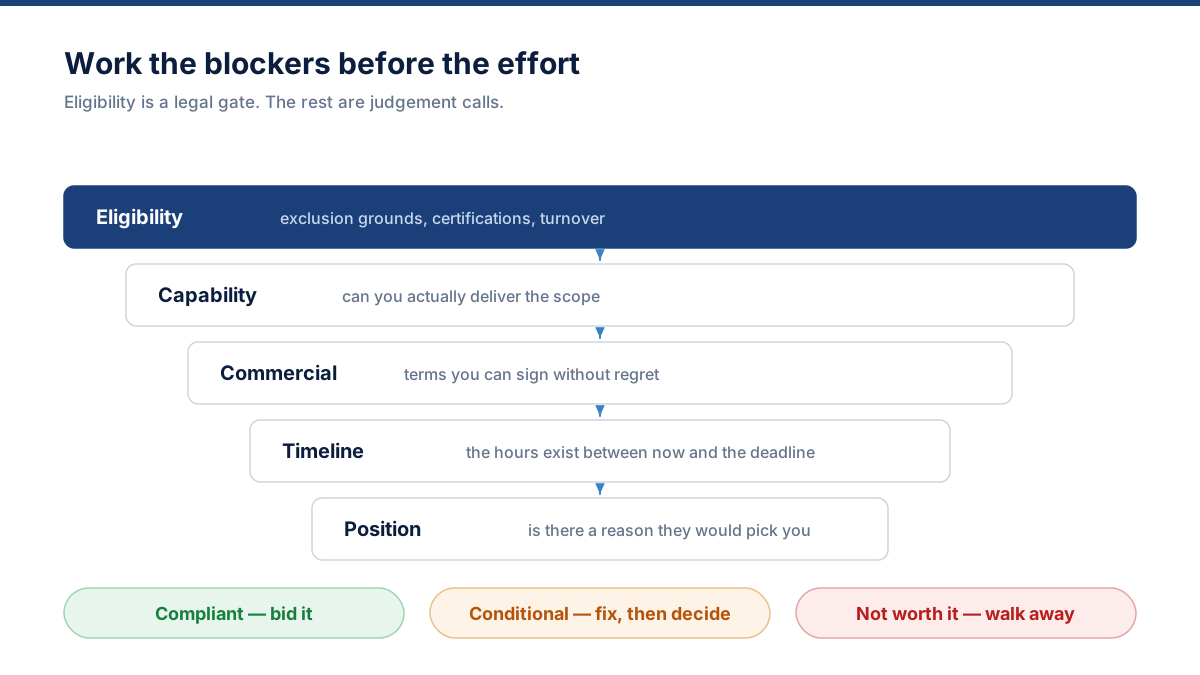
The most expensive bid is the one you should not have entered
A bid that was never eligible consumes the same weeks as one that was. The subject experts still get pulled off delivery work, the reviews still happen, the pricing exercise still runs — and the outcome was fixed on day one by a certification nobody checked for.
Qualification is cheap and disqualification is expensive, which is why the decision belongs at the start rather than at the point where sunk cost starts making it for you. The questions that matter are almost never about how attractive the contract looks. They are about whether you can legally, practically and profitably deliver it, and whether you can prove that on paper before the deadline.
The honest answer to several of these questions is often "not yet known" — and that is the most useful answer of all, because it converts directly into a task with an owner and a date rather than an assumption that survives until week four.
Once you have decided to bid
Qualification tells you whether to start. It does not tell you what the tender actually demands. That comes from reading the document properly, which is what the free analyzer is for.