Company Brain: Your Reusable RFP Knowledge Base
An RFP knowledge base exists in your company already — it is just not in one place. Almost nothing a buyer asks is genuinely new, and your methodology has been described before, your certifications listed before, your reference projects written up before. The problem is that the material is scattered across old proposals, policy documents and folders owned by people who have left.
Load it once, use it on every bid
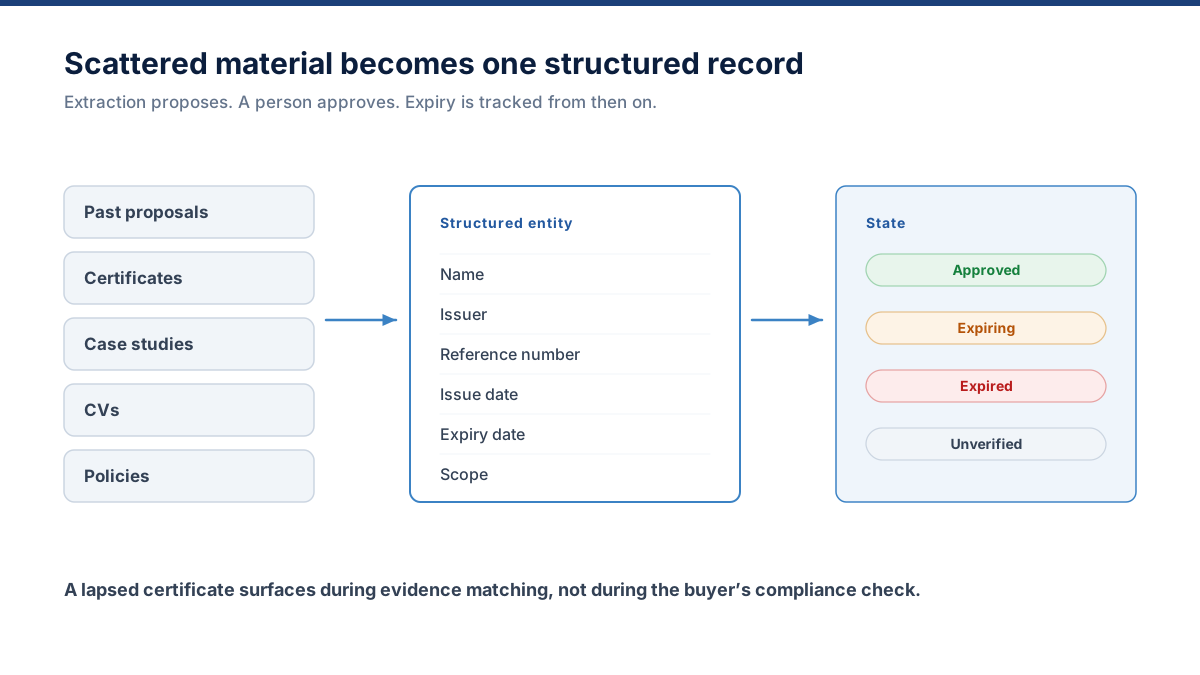
You upload your organisational knowledge. TenderOS extracts structured entities from it — a certificate becomes a name, issuer, reference number, issue date, expiry date and scope — Cyber Essentials, renewed every twelve months, is the one that catches teams out; a case study becomes a client, industry, country, project type, dates, deliverables and technologies; a CV becomes a name, title, experience, skills and project history.
Someone on your side reviews and approves what is accurate. From that point, every requirement in every future tender is searched against that approved material, so the question stops being "who remembers where the ISO certificate lives" and becomes "does this clause have proof, yes or no".
This is the part of the product that compounds. The second tender is faster than the first. The tenth is considerably faster than the second, because the evidence, the wording and the structure are already indexed, current and approved.
Approved claims
Beyond documents, Company Brain holds explicit approved statements — the sentences your organisation has confirmed it is willing to make in writing. Each one carries the evidence behind it, who approved it, when, and until when it remains valid.
Document types Company Brain indexes
Manual upload at first. Connectors to Google Drive, SharePoint, OneDrive and Notion are planned, but they are not a reason to delay having a usable knowledge base.
Approved is not the same as uploaded
Four states, one rule: only approved knowledge is allowed to support a factual claim in a generated response.
Unverified
Extracted from an uploaded document but not yet confirmed by anyone in your organisation. Not usable to support a claim.
Approved
Confirmed accurate by a named person on a known date. This is what grounded drafting draws on.
Expired
Was approved, but the underlying certificate, insurance or licence has passed its validity date. Flagged, never used silently.
Archived
Superseded or withdrawn. Retained for the audit trail, excluded from retrieval.
The questions you keep failing to answer
Over several bids a pattern emerges. The same categories of question arrive and the same categories of evidence are missing — a data retention policy nobody has written, a disaster recovery test nobody has documented, an ESG statement that does not exist.
TenderOS records where evidence was requested and none was found, so instead of rediscovering the gap under deadline pressure every time, your organisation gets a list of the documents it should produce once and stop losing marks on.
The same applies to expiry. Certificates, licences, insurances and bonds all have dates, and a bid team that only discovers a lapse on submission day has a process problem rather than a paperwork problem.
Company Brain questions
What is Company Brain?
How is it different from a shared drive?
Does the AI decide what is true about our company?
What happens when a certificate expires?
Can one customer’s knowledge reach another?
How long before it is useful?
Start with the tender, then build the brain
Run a live tender through the free analyzer to see what the buyer demands. The evidence side follows once you know which proofs you keep being asked for.