Evaluation & comparison
Best RFP Software: How to Evaluate It Properly
Select the best RFP software using a clear evaluation framework covering document analysis, grounding, collaboration, security, and usage pricing.
Choosing between RFP software alternatives is itself a procurement exercise, and it suffers from the same failure it is meant to solve: decisions made on demonstrations rather than on evidence. The guides here cover what to compare, what the category names actually denote, and which differences survive contact with a real tender.
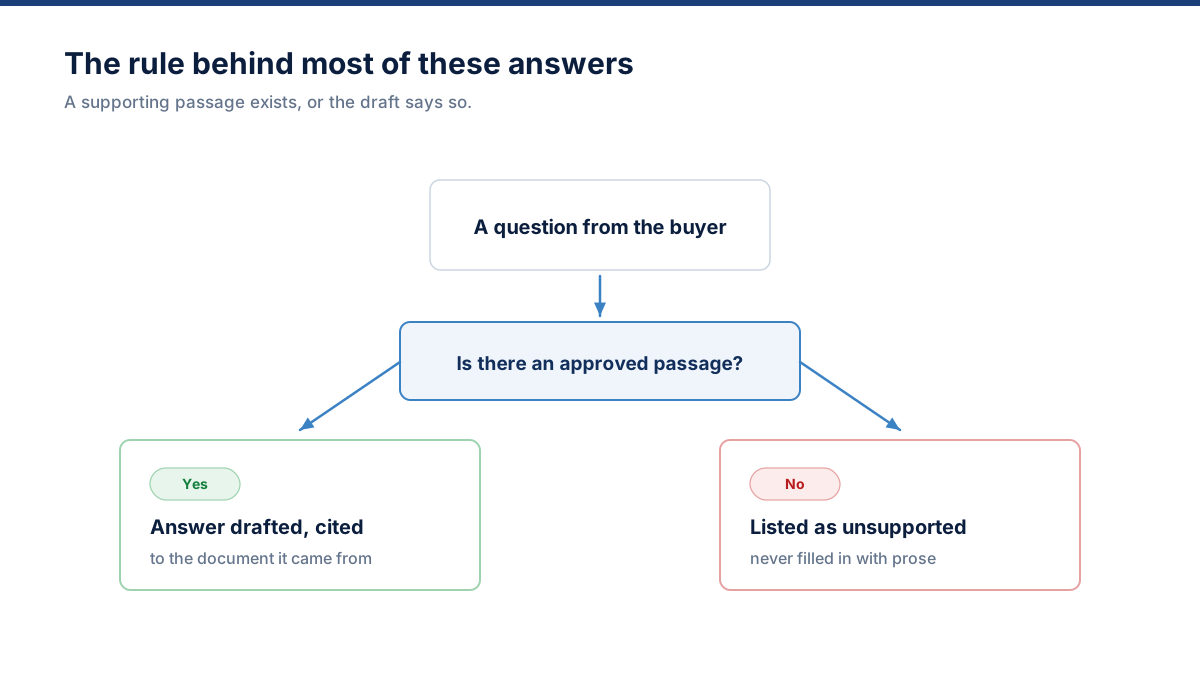
Vendor demonstrations are constructed to succeed. They use a clean tender, a well-populated evidence library, and questions the system is known to handle, none of which predicts behaviour on the case that decides value: a requirement the organization cannot satisfy. The decisive property is not the quality of the text produced when evidence exists but what happens when it does not.
Run any evaluation on your own documents rather than the vendor’s sample set. A platform whose behaviour degrades on real, messy evidence is telling you what it will do in the week before a deadline, and if a trial cannot be run against your own material, that restriction is itself an answer.
Buying the platform is itself a procurement exercise; the General Services Administration publishes the vehicles and schedules that structure how US federal bodies run exactly that evaluation.
Select the best RFP software using a clear evaluation framework covering document analysis, grounding, collaboration, security, and usage pricing.
Evaluate RFP software alternatives by testing content migration, document parsing accuracy, export options, and clear vendor technical requirements.
Compare dedicated RFP software vs ChatGPT: standard chatbots draft prose, while specialized systems track mandatory clauses, evidence, and compliance.
Enterprise RFP software delivers tenant isolation, granular permissions, audit logs, data residency controls, and zero third-party model training.