Bid operations
RFP Addendum Tracking and Change Detection
Systematic RFP addendum tracking compares document revisions to show how deadline shifts or requirement changes impact existing draft responses.
A single bid can be run out of one person’s head. A pipeline of them cannot. The guides in this section deal with what changes when bidding becomes a repeated operation across several people — who owns which requirement, who may approve a response, how several live bids are overseen at once, and what is captured at the end so the next bid starts further along than the last one did.
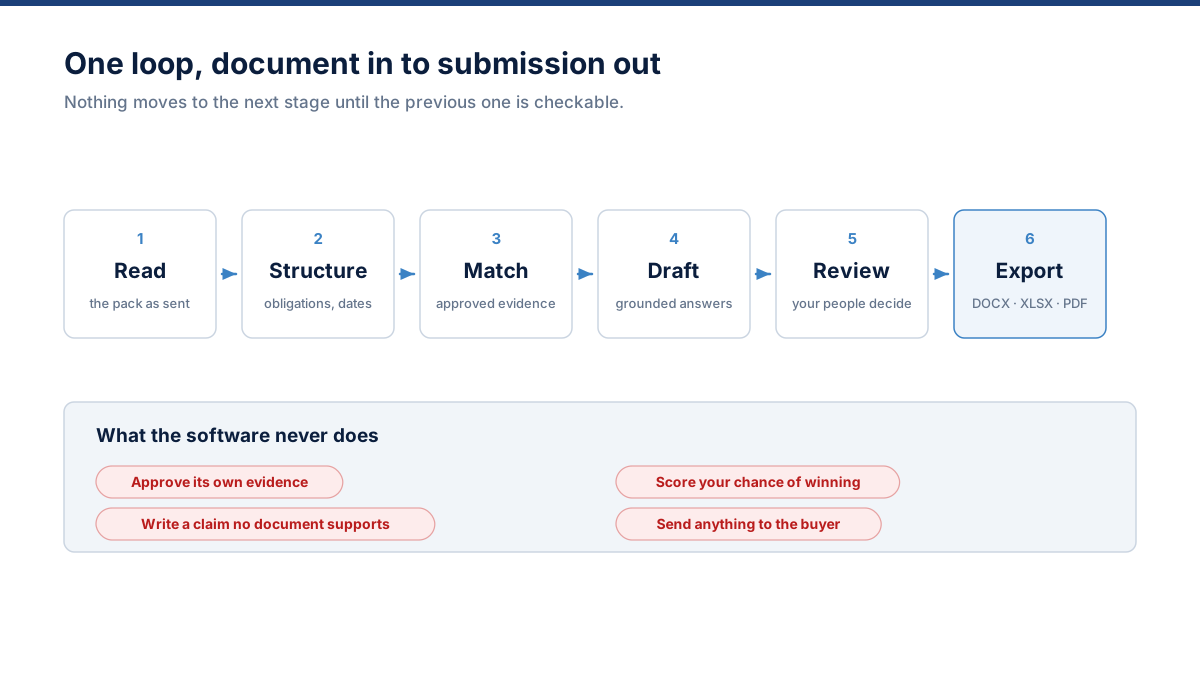
The structural fault most teams share is that their intended process and their actual process diverge under deadline pressure, and nothing records the divergence. An approval recorded by the person who wrote the response is not an approval; a review comment resolved by deletion is not a resolution. Governance that exists only as an agreed convention will be bypassed in the final week, every time.
The other theme here is institutional memory. Most of the effort in a tender response has been expended before on a previous tender, and the difference between a team that compounds that work and one that repeats it is whether anything was deliberately captured while the detail was still fresh.
Professional standards for how this work is organised and reviewed are maintained by the Association of Proposal Management Professionals.
Systematic RFP addendum tracking compares document revisions to show how deadline shifts or requirement changes impact existing draft responses.
Modern RFP collaboration software assigns requirements to domain experts, tracks review status, enforces approvals, and maintains full version history.
Multi-bid RFP tracking software provides clear operational visibility over active deadlines, open bottlenecks, missing evidence, and pending approvals.
Which parts of end to end RFP automation are realistic, which need a human decision by design, and why nobody should automate the submit click.
Conduct thorough RFP contract review to catch liability limits, indemnities, IP rights, liquidated damages, and termination clauses before signing.
An automated RFP response checker verifies requirement coverage, supporting evidence, character limits, and numerical consistency prior to approval.